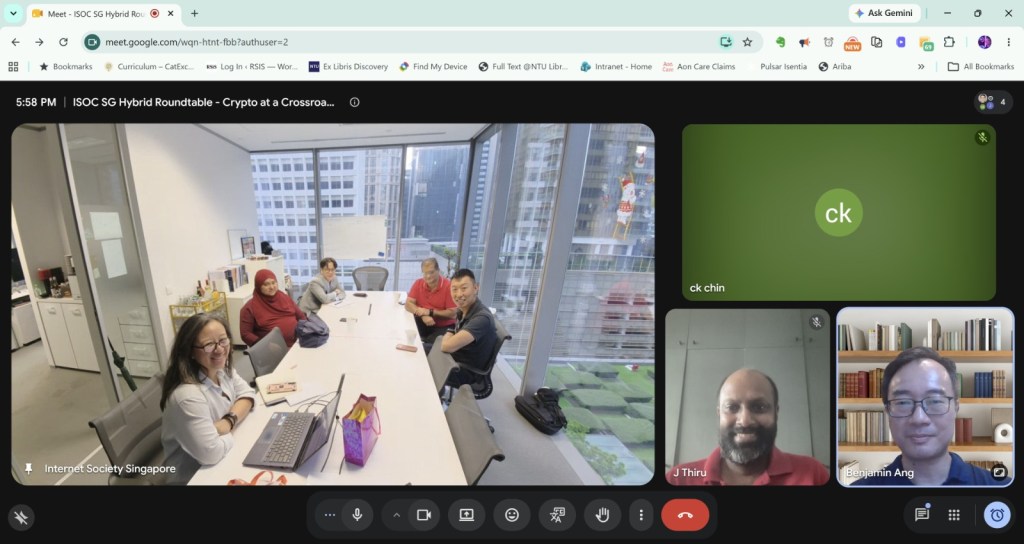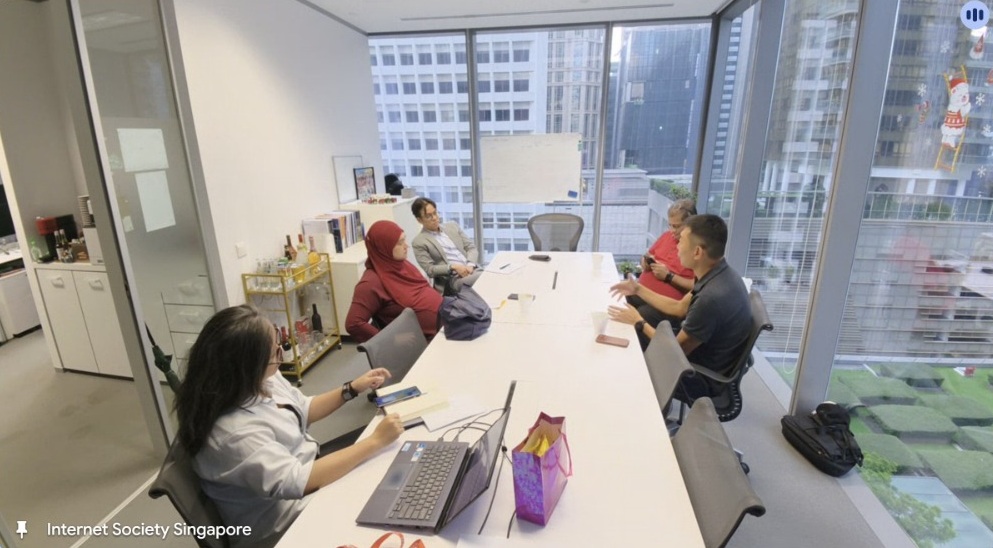
Reflections from the ISOC Singapore hybrid roundtable 25 November 2026, Crypto at a Crossroads – Lessons from the Binance Hack and What Comes Next
The Internet Society Singapore Chapter (ISOC SG) hosted Chan Yam Ki, recent MD of Circle, and together with members and friends of ISOC SG, discussed the historic $6.3 billion Binance security breach in late 2026, which was crypto’s largest heist in history. The key takeaway was: when valuable assets depend on digital keys, security depends on who can use those keys, how their actions are authorised, and whether the surrounding controls work in practice.

The discussion started with a quick but detailed post-mortem of the Binance hack, involving a multi-modal months-long operation involving social engineering and compromised work devices. The attackers reportedly gained access through multiple points before reaching systems connected to wallet authorisations. A number of observations on cybersecurity were raised:
1. This breach was not a crypto-specific security problem. Organisations across sectors rely on credentials, permissions and cryptographic keys to protect critical systems. Financial services and technology firms have the same underlying risks of compromised devices, excessive access and weak approval processes. None of these processes which failed, are unique to crypto.
2. A key can be securely stored and still be misused if the process for instructing or approving its use is poorly controlled. Effective oversight needs to look at the full chain: who can initiate an action, how their identity is verified, who authorises it, and how it is executed. The same principle applies to regulatory supervision. Knowing where keys or data are stored is not enough if the people and systems that can direct their use operate across multiple jurisdictions.
3. Decentralised operations create governance gaps. This is especially challenging when a firm is licensed in one place but runs global operations elsewhere. A local regulatory foothold does not automatically provide visibility into every relevant system, employee or decision.
4. Implementing governance mechanisms. The roundtable highlighted several controls that can help prevent a series of small failures from becoming a major incident:
- Separate duties and require independent approval for sensitive transactions.
- Set transaction limits and add human review for high-value or unusual activity.
- Review changes to wallet addresses and permissions, with a cooling-off period where appropriate.
- Separate reserve funds from transaction funds and restrict how systems can move between them.
- Use risk-based device controls for staff with access to critical assets.
- Keep sensitive work separate from personal activity and general-purpose devices.
These measures add friction which inconvenience legitimate users, but can also create time and opportunities to detect suspicious activity before funds move beyond reach.
5. Cross-border oversight remains a challenge with offshore exchanges or other intermediaries. Local regulators may have limited ability to compel cooperation or inspect controls. That creates difficult questions about accountability, consumer protection and what happens when an incident crosses borders.
The discussion pointed to the importance of bringing intermediaries serving local users within effective supervisory frameworks. It also highlighted the need for regulators to understand the operational details of signing workflows—not just the location of assets.
6. Public blockchains can provide a visible trail of transactions, supporting forensic analysis and coordination during an incident. The speakers also discussed how stablecoin issuers may be able to freeze tokens when presented with valid legal orders.
But those capabilities vary across assets and intermediaries. Once funds move into assets that cannot be frozen by a central issuer, or pass through multiple services and jurisdictions, or moved into private blockchains, tracking and recovery can become more difficult. Visibility is valuable; it is not the same as control.
7. We need to prepare for finance built on cryptographic keys. Blockchain-based systems and digital assets are becoming part of broader conversations about the future of finance. Professionals in policy, regulation and technology should be prepared to understand key management, multi-party computation, approval structures and endpoint security—not treat them as specialist concerns for the crypto sector alone.
In conclusion, strong technology is not enough. Security also depends on disciplined operations, clear accountability and controls that remain effective when people, devices and organisations are under pressure.